Quick answer: Interstate car transport from Newcastle means a licensed carrier collects your vehicle from the Newcastle or Hunter area and delivers it to another state, either to your door or to a depot. Most people book an open carrier for everyday cars and an enclosed one for prestige, classic or low-clearance vehicles. Newcastle to Brisbane is one of the most popular runs. Book early, prepare the car properly, and sort the registration paperwork for the destination state before it arrives.
If you’re reading this, a car needs to get from Newcastle to somewhere that isn’t next door. Maybe you’ve accepted a job in Queensland. Maybe you bought a car online and the seller is two states away, or a family member needs a vehicle and you can’t spare a week to drive it.
Whatever the reason, interstate car transport Newcastle drivers rely on has changed a lot in the last few years. Booking is quicker, tracking is better, and there are more service options to choose from. This 2026 guide covers how the process works, what to expect on the Newcastle to Brisbane run, and what to check before you hand over the keys.
Why Newcastle drivers choose to ship rather than drive
Driving a car interstate sounds simple until you count the hours. The road distance from Newcastle to Brisbane is around 768 km, which is roughly seven and a half hours behind the wheel in normal traffic. That’s before fuel stops, a night’s accommodation and the flight or train home.
Then there’s wear. Every kilometre you drive comes off your odometer and adds to your service schedule. If the car is heading to a new owner or a dealership, those extra kilometres can matter. Add the risk of a long-haul breakdown, and shipping starts to look like the calmer option.
Newcastle is also well placed for this. The city sits on the Pacific Motorway corridor, a 140-kilometre motorway link to Sydney that connects into the national road network. Carriers running the east coast pass close to the Hunter regularly, and that helps with pickup scheduling.
How interstate car transport in Newcastle actually works
The process is simpler than most first-timers expect. It usually runs like this:
- You request a quote. Give the pickup and delivery locations, the vehicle’s make and model, whether it runs and drives, and your preferred timeframe.
- You choose a service type. Door-to-door or depot-to-depot (more on that below), plus open or enclosed carrier.
- A pickup window is arranged. Carriers work to schedules and routes, so you’ll normally get a window rather than a fixed hour.
- The driver inspects and loads the car. You both sign a condition report noting any existing marks.
- Your vehicle travels interstate. Good providers keep you updated along the way.
- Delivery. You inspect the car against the original report, sign off, and you’re done.
Our complete guide to car transport in Australia covers the wider process if you’d like the big picture before diving into Newcastle specifics.
Door-to-door or depot-to-depot?
This is the first real decision, and it’s mostly about convenience versus flexibility.
Door-to-door means the carrier collects the car from your address (or as close as a large truck can safely get) and delivers to the destination address. It suits busy people, and anyone whose car needs to arrive at a specific home or workplace. Keep in mind that a full-size carrier can’t always turn into narrow streets. If you live somewhere tight, you may be asked to meet the driver at a nearby main road or car park.
Depot-to-depot means you drop the car at a depot and collect it from another at the other end. It can suit people who are flexible on timing and don’t mind a bit of extra legwork. Our explainer on depot to depot car transport in Australia walks through how that works step by step.
If you’re unsure which suits you, tell us your addresses and timing when you enquire. We’ll point you toward the practical option rather than just the standard one.
Open carrier or enclosed carrier?
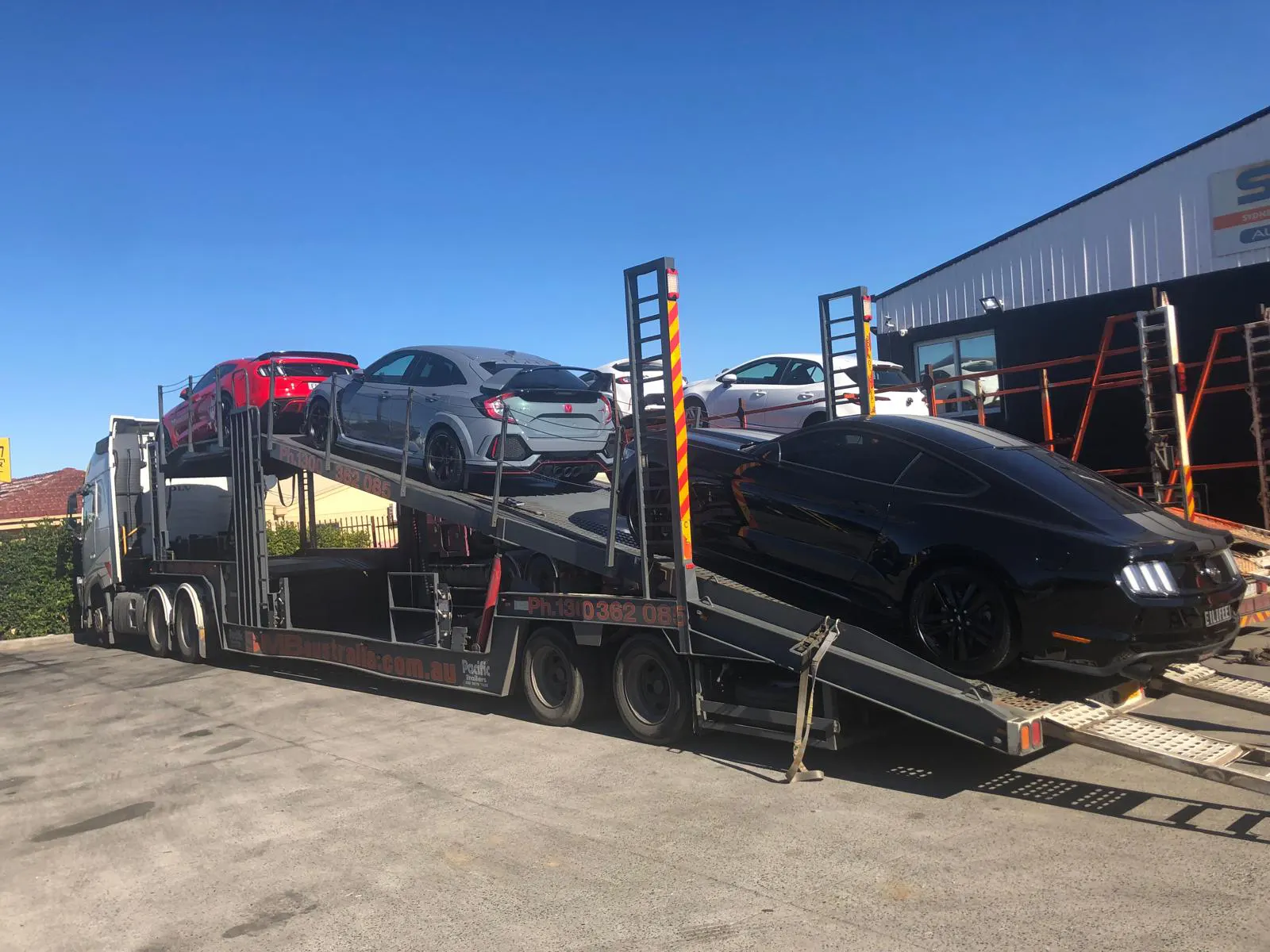
Open carriers are the everyday workhorse. Several vehicles ride on a multi-level trailer, and your car is strapped securely in place. It’s the most common choice for family cars, hatchbacks, utes and SUVs. Your car is exposed to the elements, but that’s no different from what it would face parked outside at home.
Enclosed carriers wrap the vehicle in a covered trailer, shielding it from weather and road debris. People usually pick this for luxury and sports cars, classics, restored vehicles, or anything they’d be upset to see with a stone chip. Enclosed spaces are more limited, so book earlier if you need one.
Car transport Newcastle to Brisbane: what to expect
Newcastle to Brisbane is a busy corridor. Plenty of people move between Queensland and the Hunter for work, family and lifestyle reasons, and dealerships and online buyers add steady vehicle traffic. Because so many carriers already run the Pacific Motorway route, this is often one of the smoother interstate jobs to arrange.
A few practical things to know for car transport Newcastle to Brisbane:
Timing. Transit is usually a matter of days, not weeks, though the exact time depends on the carrier’s route, how many stops it makes and conditions on the road. Weather, roadworks and school holiday traffic can all nudge the schedule. Ask for an estimated delivery window rather than a promise of a specific day.
Route. Most carriers take the Pacific Highway and Motorway north through the Mid North Coast and Northern Rivers, crossing the border near the Gold Coast. That’s the same stretch many people know from road trips.
Queensland registration. If you’re moving to Queensland and the car will be garaged there, the Queensland Government says you need to register the vehicle in Queensland, and you have 14 days to do so or risk a fine. Check the requirements before the car arrives so you’re not scrambling once it’s in the driveway.
Biosecurity. South-east Queensland has a red imported fire ant infestation, and NSW has rules in place to stop it spreading south. NSW Department of Primary Industries explains that movement of certain carrier materials from infested areas is restricted unless conditions are met. A private car isn’t the main concern, but soil, mulch and plant material stuck in wheel arches or the undercarriage are exactly what inspectors worry about. If your car is travelling south from Queensland to Newcastle, have it properly cleaned first.
Going the other way, Brisbane to Newcastle works much the same. We regularly see it with dealership stock and private sales.
Newcastle vehicle transport interstate: other routes
Brisbane gets a lot of attention, but Newcastle vehicle transport interstate covers every state and territory. Common routes include:
- Newcastle to Sydney and Canberra, short hops that are sometimes used for auction pickups and dealership swaps.
- Newcastle to Melbourne, a big favourite for relocations and online purchases.
- Newcastle to Adelaide and Perth, longer hauls where booking early and being flexible on dates helps a lot.
Because Newcastle is close to Sydney, longer routes are often consolidated through major hubs. Our interstate car transport from Sydney page explains how that network connects to other capitals.
Car shipping Newcastle NSW: how to prepare your vehicle
A little preparation avoids most of the problems people run into. Before pickup:
- Wash the car. Dirt hides scratches and dents, and it makes the condition report much more accurate. A clean underbody also matters for biosecurity, as our FAQs point out.
- Photograph everything. Take clear photos of every panel, the wheels, the roof and the interior. Timestamped images are your best friend if there’s ever a disagreement.
- Remove personal items. Carriers generally aren’t set up to carry loose belongings inside the car, and those items usually aren’t covered by insurance.
- Check fluids and the battery. A car that starts, steers and brakes properly is easier and safer to load.
- Keep fuel low. A quarter of a tank is a common guideline, because extra weight isn’t helpful on a loaded truck.
- Note the extras. Tell the carrier about modifications, low ground clearance, roof racks or oversized tyres. They can affect how the car loads.
- Hand over spare keys and remotes, and let the driver know about any quirks, like a sticky handbrake.
If your vehicle doesn’t run, that’s often still manageable. Unicorn’s FAQ notes that many transport services can handle non-operational or unregistered cars, but you’ll need to describe the problem clearly so the right equipment is arranged.
Paperwork, insurance and registration
Insurance. Never assume your vehicle is covered in transit. Ask what the carrier’s insurance includes, what’s excluded, and whether you should tell your own insurer. We’ve broken this down in our article on interstate car transport insurance explained, and it’s worth reading before you book.
Registration. Registration follows where the car is garaged, not where it travels. If you’re bringing an interstate vehicle into NSW to stay, Service NSW says you’ll need to transfer or register it here, which involves a blue slip inspection, compulsory third party (green slip) insurance and a visit to a Service NSW centre. The blue slip is valid for a limited window, so don’t book the inspection too early.
Licence. If you’re relocating yourself, remember that your driver licence usually needs transferring too. Each state sets its own time limit, so check the one you’re moving to.
What affects your quote
We’re not going to throw numbers at you here, because a good quote is specific to your car and your route. The main things that shape it are:
- Distance and route. Busy corridors are usually simpler to service than remote destinations.
- Vehicle size and weight. A small hatchback and a large four-wheel drive take up different amounts of trailer space.
- Open or enclosed transport. Enclosed generally involves more specialised equipment.
- Pickup and delivery locations. Metro addresses are easier to reach than rural properties or tight streets.
- Timing. Flexible dates give the carrier room to fit your car onto an existing run. Peak times, like school holidays and end-of-financial-year, book out faster.
- Vehicle condition. Non-running cars need extra handling.
The simplest way to get a clear answer is to request a free quote with your details. Compare quotes on what’s included, not just the headline, and ask about insurance and delivery windows.
How to choose a car transport provider you can trust
When you’re handing over a valuable asset, a few simple checks go a long way:
- Ask about insurance in writing. Know what’s covered and what isn’t.
- Look for clear communication. You should get a real update before pickup and during transit, not silence.
- Check for transparency. A trustworthy provider explains what’s included and doesn’t bury conditions in fine print.
- Read genuine reviews. Look for comments on punctuality, condition on arrival and how problems were handled.
- Confirm the service type. Make sure door-to-door or depot options, and open or enclosed carriers, match what you want.
- Beware of quotes that seem too good to be true. Unrealistic quotes often lead to delays or last-minute changes.
Frequently asked questions
How does interstate car transport work in Newcastle?
You request a quote, choose door-to-door or depot-to-depot service, and agree on a pickup window. The driver inspects and loads your car, transports it interstate, and delivers it to the agreed destination, where you sign off on its condition.
How long does car transport from Newcastle to Brisbane take?
It usually takes a matter of days, but it varies with the carrier’s route, stops, weather and road conditions. Ask for an estimated delivery window when you book.
Can I send a car interstate if it isn’t running?
Often, yes. Many transporters can handle non-running or unregistered vehicles, but you’ll need to describe the vehicle’s condition so the right equipment is arranged.
Should I choose open or enclosed transport?
Open carriers suit most everyday vehicles. Enclosed carriers offer extra protection from weather and road debris, and they’re popular for luxury, classic and high-value cars.
Do I need to be there for pickup and delivery?
You or a nominated person should be there to sign the condition report and hand over the keys. If you can’t attend, arrange a trusted representative in advance.
Do I need to do anything about registration when the car arrives?
If the car will be garaged in a new state, you’ll generally need to register it there within that state’s deadline. Check the relevant authority’s requirements before delivery.
Ready to move your car from Newcastle?
Interstate car transport shouldn’t feel like a gamble. With the right preparation, a clear understanding of the service options and a provider who communicates properly, the whole thing can be surprisingly painless.
At Unicorn Car Transport, we move vehicles across Australia with door-to-door and depot-to-depot options, and enclosed carriers for vehicles that need extra care. Whether you need car transport Newcastle to Brisbane, Newcastle vehicle transport interstate to another capital, or car shipping Newcastle NSW for a dealership run, we’ll talk you through the practical options first.
Get your free interstate car transport quote today and give your car the smoothest journey possible.