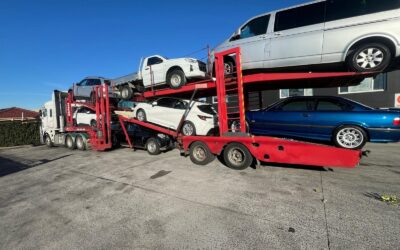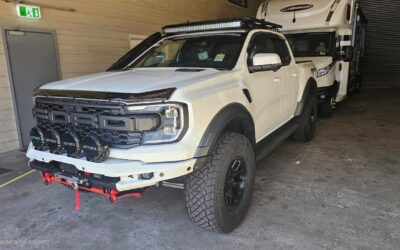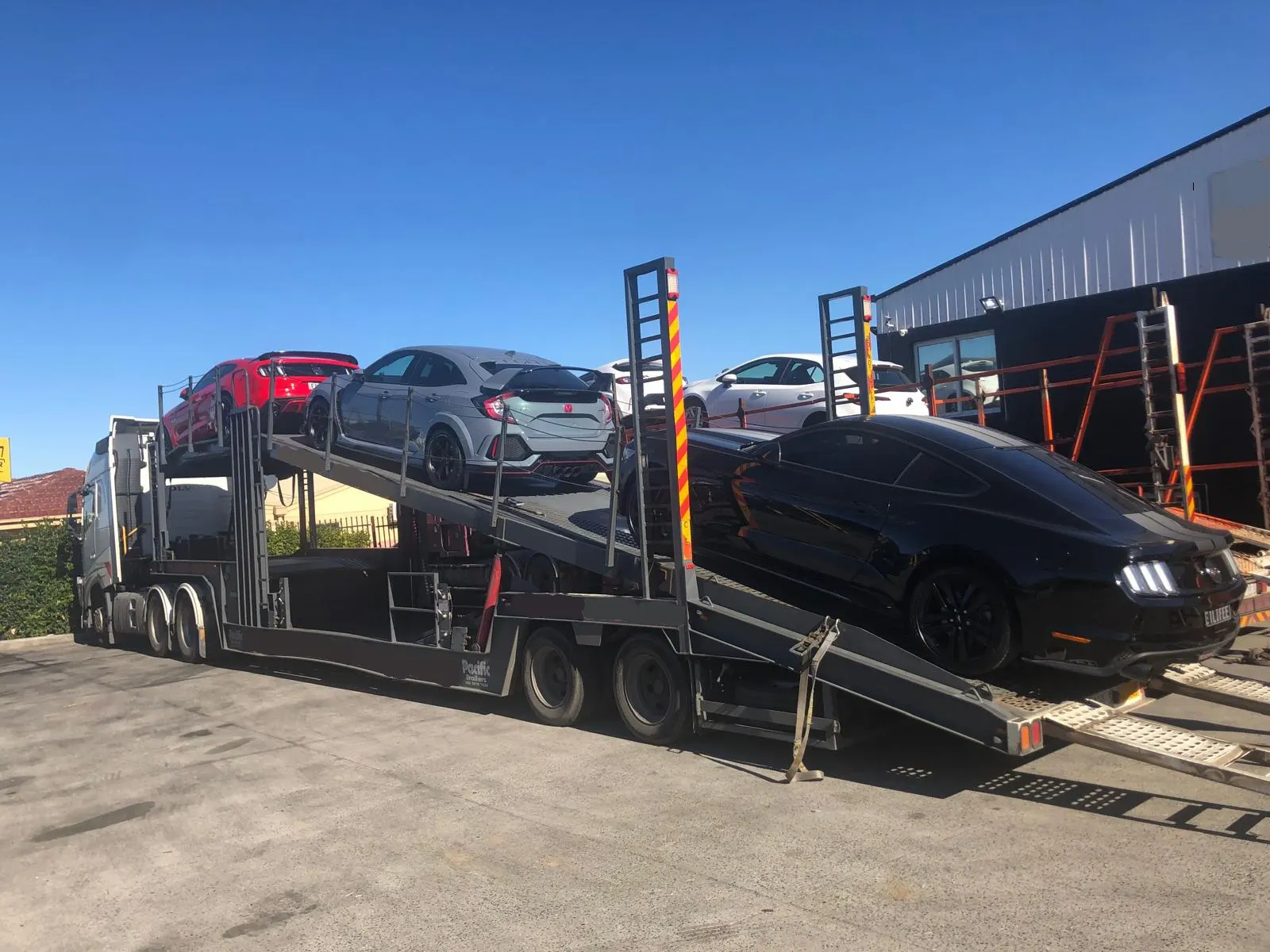
Quick answer: A car carrier truck is a specialised vehicle carrier that moves your car on a deck instead of on its own wheels. In Australia you’ll mostly meet three types. Tilt tray trucks use a hydraulic tray that tilts and slides to ground level, so they suit non-runners and low cars. Single-car carriers take one vehicle per truck, which makes them the most personal option. Multi-car carriers have two decks and move several cars at once, so they work well on long interstate runs. Because the right choice depends on whether your car runs, how low it sits, how flexible your timing is and where it’s going, read on before you book.
Ever been stuck behind a semi carrying brand-new cars on the Hume Highway? That’s one kind of car carrier truck. If you spot a flatbed on the roadside with a single car on the back, that’s another. Same basic job, but very different machines.
Here’s where it gets confusing. When you start asking for quotes, people toss around phrases like car transport trucks, vehicle carrier truck, tilt tray and single-car as if everyone speaks the lingo. Most of us don’t, and that’s completely fair. However, picking the wrong type can mean a truck that can’t load your car, a pickup you have to reschedule, or a delivery that takes longer than it needed to.
So let’s clear it up. Below, we explain how each type of car carrier works, who it suits, where it falls short and how to match it to your own vehicle. If you’d rather skip the reading, request a quote and tell us about your car, and we’ll point you to the right option.
What Is a Car Carrier Truck?
A car carrier truck is a truck, or a truck-and-trailer combination, that moves cars, utes and other light vehicles on a deck. Although you’ll hear plenty of names for it, including car carrier, car transporter, car transport trucks and vehicle carrier truck, they all sit in the same family.
Wikipedia describes a car carrier trailer as a trailer or semi-trailer that moves passenger vehicles efficiently, and manufacturers commonly rely on the big commercial versions to get new cars to dealerships. A prime mover pulls most of these rigs, although shorter rigid trucks with a trailer exist too, as Driver Knowledge Tests explains in its overview of car transporters.
So what changes from one machine to the next? Mainly how many cars it carries and how a car gets onto the deck, and that’s exactly where the three types split.
Tilt Tray Transport: The Flexible All-Rounder
A tilt tray, or rollback, is a truck with a flat tray on the back. Hydraulics tilt the tray and slide it rearward until the end touches the ground, which turns it into a ramp. The operator then drives the car on or pulls it on with a winch, as Wikipedia’s tow truck entry outlines. Once the car sits on the tray, the tray slides forward, levels out and the operator straps the car down.
That winch is the key difference. Multi-car trailers generally don’t come with winches or loaders, so they depend on each car driving on under its own power, according to Wikipedia. A tilt tray, however, has no such limit, so tilt tray transport is often the go-to for:
- Cars that don’t run, or project cars halfway through a rebuild
- Lowered vehicles and sports cars with limited ground clearance
- Pickups where a full-length double-deck rig can’t get close
- Quick, point-to-point moves where timing matters
The trade-off? A tilt tray usually carries one vehicle, so it isn’t the most efficient way to cover very long distances. For short hops and tricky jobs, though, it’s hard to beat.
Single-Car Carriers: One Car, One Truck
Here’s a bit of jargon worth untangling. “Single-car carrier” describes capacity: one car on the truck. “Tilt tray,” on the other hand, describes how the deck loads. The two overlap a lot, so plenty of single-car carriers are tilt trays too.
Hino Australia gave a good example when it showed a recovery truck for supercars. The truck has a single-car carrier body and a tilt tray slide, so the tray slides off the back and lets crews load the car at almost any angle, right down to zero degrees. That near-flat approach is why these rigs treat low and delicate cars so gently.
Single-car carriers make sense when:
- Your vehicle is rare, very low, high-value or sentimental
- You want a dedicated truck with no other cars on board
- You need a flexible pickup rather than waiting for a shared run to fill
The trade-off is simple, though. You’re using a whole truck for one car, so you get a more personal service, but it takes a little more coordination than a shared run.
Multi-Car Carriers: The Interstate Workhorse
Picture the classic car transporter: a long semi with two decks and hydraulic ramps. According to Wikipedia, open commercial car carrier trailers typically have that double-deck design, with ramps that tilt and lift independently so crews can load cars in different positions. Because of that design, most of these rigs carry several vehicles at once.
These cars generally drive on under their own power. Meanwhile, the whole rig stands tall, with three or four vehicles sitting up to 4.2 metres high, so it has a high centre of gravity, as Driver Knowledge Tests points out. That’s one reason experienced drivers matter on these runs.
Multi-car carriers shine when:
- The car runs, steers and brakes normally
- The vehicle is standard height with normal ground clearance
- You’re moving it a long way, such as between capital cities
- You’re a dealer, fleet manager or family moving several vehicles at once
The catch is flexibility. A multi-car truck follows a route and a loading plan, so the run dictates your pickup and delivery windows. Very low or heavily modified cars can also struggle with ramp angles, so mention any modifications up front.
Tilt Tray vs Single-Car vs Multi-Car: Side by Side
In short, here’s the whole comparison in one table.
| Tilt tray | Single-car carrier | Multi-car carrier | |
|---|---|---|---|
| Cars per trip | Usually one | One | Several |
| Non-running cars | Yes, with a winch | Usually yes | Rarely, as most need to drive on |
| Low or modified cars | Good, shallow loading angle | Very good | Check with the carrier first |
| Best for | Project cars, short moves, tricky pickups | Rare, valuable or sentimental cars | Standard cars, long interstate routes |
| Scheduling | Flexible | Most flexible | Follows a set route |
Open or Enclosed? That’s a Separate Choice
The truck type is only half the decision. The other half is whether your car travels open or enclosed, because modern carriers come both ways, as Wikipedia notes. Open is the everyday option, while enclosed suits cars you’d rather keep out of the weather and out of sight. At Unicorn Car Transport we offer open and enclosed carriers, plus door-to-door or depot options, and our services page shows how it all works.
How Is Your Car Secured on a Car Carrier?
It’s the question everyone wants answered, so here goes. In Australia, operators have to restrain a heavy vehicle’s load so it can’t shift in relation to the vehicle. The NHVR’s Load Restraint Guide is the national reference, and its direct restraint guidance covers vehicles on wheels, including cars. In practice, direct restraint generally means the crew lashes the car straight to the carrier instead of relying on friction or containment. In plain English, the crew ties it down properly.
You can also help the process along with a few small habits:
- Photograph your car from every angle before pickup
- Remove personal items, loose fittings and anything that isn’t fixed to the car
- Keep the fuel level low, and ask your carrier what they require
- Mention any modifications, low ground clearance or mechanical quirks
- Say whether the car starts, steers and brakes normally
Four Questions to Pick the Right Vehicle Carrier Truck
- Does it run? If it won’t start, steer or brake, you’re looking at a tilt tray or a single-car carrier with a winch.
- How low or modified is it? Low cars and show cars do best with a shallow, near-ground loading angle, so lean towards a tilt tray or single-car carrier.
- How much does timing matter? If you need a pickup on a specific day, a dedicated carrier gives you more control. If you’re happy to work to a route schedule, however, a multi-car run is usually a sensible fit.
- How far is it going? For long interstate hauls with a standard car, multi-car carriers tend to make the most sense. For short or one-off jobs, on the other hand, a tilt tray often wins.
Still undecided? That’s normal, so send us the make, model, condition and route through our quote form and we’ll recommend the carrier that fits.
Matching the Truck to the Route
Distance changes the maths. Popular corridors like Sydney to Melbourne or Melbourne to Brisbane are often a sensible fit for multi-car runs when your car is a standard runner. Longer hauls such as Brisbane to Perth need more planning, so start early. If you’re heading west, our guide to transporting a car to Western Australia explains the quarantine rules to prepare for. Moving house as well? Our interstate moving checklist covers the car, rego, licence and more. For the full picture, see our interstate car transport service.
Car Carrier Truck FAQs
What’s the difference between a tilt tray and a car carrier? A tilt tray is a truck with a hydraulic tray that tilts to ground level. It usually moves one vehicle, but it can winch a car on. “Car carrier” is the wider term, so it often points to multi-car, double-deck trailers where cars drive on.
Can a car carrier truck move a car that doesn’t run? Yes, if it’s the right type. Tilt trays and single-car carriers usually have winches for exactly that. Most multi-car trailers don’t, so tell your carrier before you book.
Is a multi-car carrier safe for my car? Generally, yes. Crews lash cars down under national load restraint rules, and experienced drivers handle the loading. Still, whichever type you choose, ask about insurance cover and get the details in writing.
When should I choose a single-car carrier? Choose one when you want a dedicated truck, a flexible pickup or extra care for a rare, low or sentimental vehicle.
How do I get a quote? Head to our quote page and share the make and model, whether the car runs, your pickup and delivery locations and your preferred dates. If you have other questions first, our FAQs cover the basics.
Final Thoughts
Every car carrier truck does the same job: getting your car from A to B without adding kilometres to the odometer. However, how they do it is what differs. For example, tilt trays bring flexibility and winch power, single-car carriers bring dedicated attention, and multi-car carriers bring efficiency over long distances. So match the truck to your car’s condition and your timeline, and the rest tends to fall into place.
Ready to move your car? Get a free quote or contact our team and we’ll sort out the right carrier together.