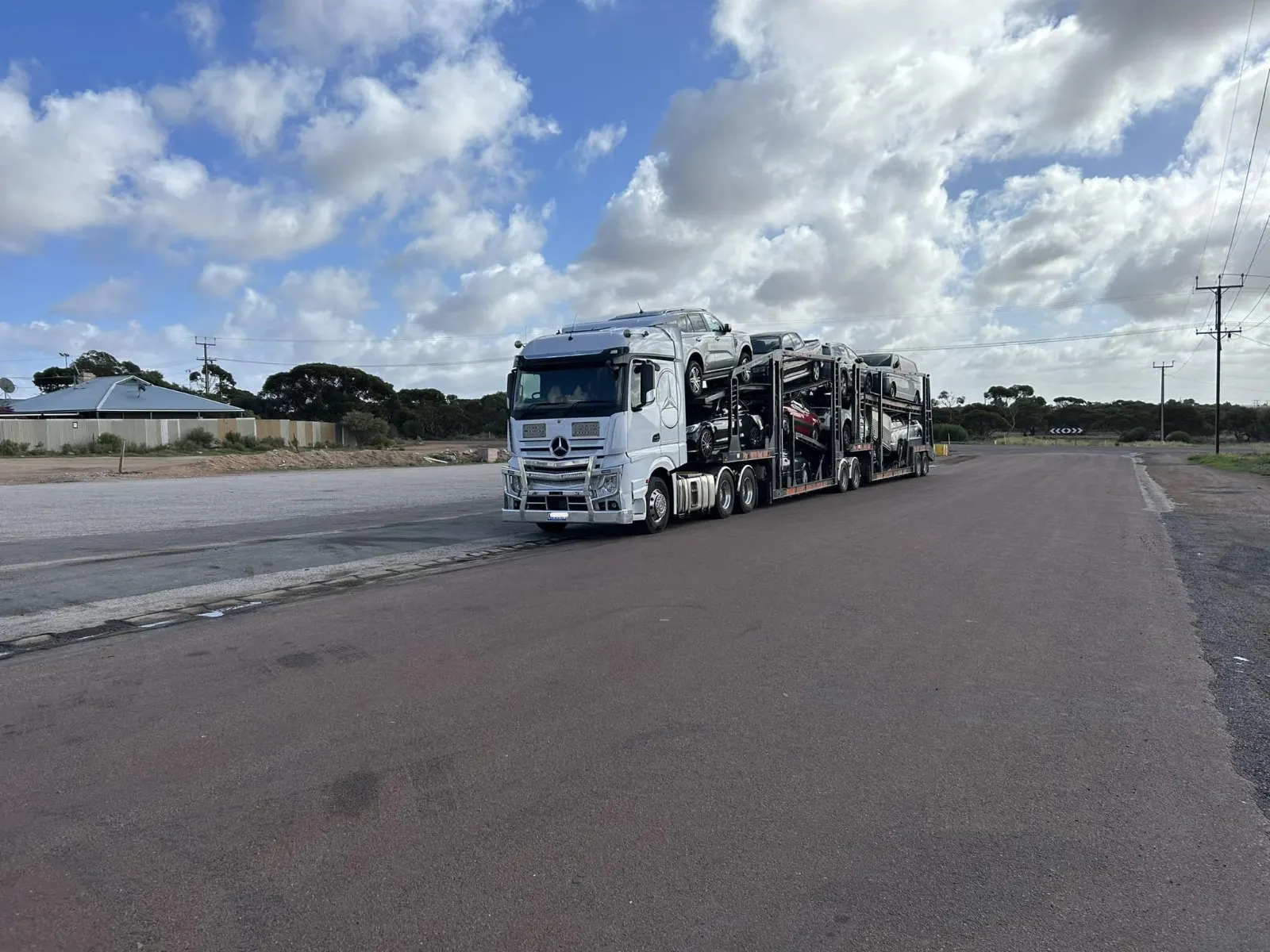
Car transport Melbourne to Darwin means having a professional carrier collect your vehicle in Victoria and deliver it to the Northern Territory, so you don’t spend days behind the wheel. Three things decide how it goes:
- Your quote depends on vehicle size, pickup and drop-off locations, carrier type, and timing.
- Transit time is usually measured in days, not hours, and often runs a bit over a week. The wet season can stretch that.
- Booking early, ideally before the Top End’s wet season ramps up, is the single easiest way to avoid delays.
If that’s all you needed, you can request a quote from Unicorn Car Transport and we’ll sort the rest. If you want the detail, keep reading.
Why Melbourne to Darwin Is a Different Kind of Run
Most interstate car moves are a relatively tidy affair. Sydney to Melbourne, say, or Brisbane to Sydney, which we’ve covered in our Brisbane to Sydney transport guide. Melbourne to Darwin is another animal.
You’re crossing the middle of the continent. Depending on the source, the road distance comes out at roughly 3,700 kilometres, and a solo driver is looking at around 37 hours of pure driving before a single coffee stop. The final stretch, the Stuart Highway, runs 2,720 km from Port Augusta to Darwin through Coober Pedy, Alice Springs, Tennant Creek, and Katherine. Fuel stops can be hundreds of kilometres apart.
That’s exactly why vehicle transport Melbourne to Darwin is such a popular choice. People move for defence postings, mining and resources work, government roles, or a lifestyle change, and most of them would rather arrive by plane and meet their car at the other end.
How the Journey Actually Works
When you book car shipping Melbourne to Darwin, the process is simpler than you’d expect.
- You get a quote. Tell us the vehicle, the pickup suburb, and the Darwin drop-off area.
- We schedule collection. Your car is picked up from an agreed address in Melbourne, or a nearby depot, and inspected and documented.
- It travels north. Carriers typically head from Victoria into South Australia, then up the Stuart Highway into the Territory.
- You’re kept in the loop. With real-time tracking and a team that actually answers the phone, you don’t have to wonder where your car is on a Tuesday afternoon.
- Delivery in Darwin. You inspect the vehicle, sign off, and you’re ready to drive.
Our interstate car transport service covers this whole process, and every vehicle we move is fully insured in transit.
Melbourne to Darwin Car Carrier Transit Time: What to Expect
This is the question we get asked most, and the honest answer is “it depends.” Still, there’s a sensible way to plan around it.
As a general guide, expect roughly one to two weeks door to door, though the exact Melbourne to Darwin car carrier transit time shifts with a few things:
- Carrier schedules. Long-haul trucks don’t leave every day with a single car on board. Loads are planned around the route, and a carrier may wait to fill space before committing to a departure.
- Pickup and delivery locations. A collection from inner Melbourne is usually simpler than a rural pickup far off the main highway. The same goes for central Darwin versus a remote property.
- Road and weather conditions. This one matters more up north than anywhere else (more on that below).
- Mandatory driver rest and compliance breaks. These are good for safety, but they do add hours across a route this long.
- Peak periods. Demand climbs around school holidays and the lead-up to Christmas. If you’re reading this in late 2026, our Christmas car transport cut-off guide explains why booking sooner beats booking later.
A practical tip: treat any delivery window as an estimate, not a guarantee, and avoid scheduling something that depends on the exact hour your car lands. Give yourself a buffer of a few days. If a carrier promises an unrealistically precise date for this route, ask how they got there.
How Much to Transport a Car From Melbourne to Darwin?
Let’s tackle how much to transport a car from Melbourne to Darwin head-on. We’re not going to throw a single number at you, because any figure published in a blog is a guess dressed up as a fact. Your quote is built from your specific situation. These are the main levers:
Vehicle size and weight. A small hatchback occupies less space and weight on a carrier than a dual-cab ute or a large 4WD. Bigger vehicles generally mean a different quote.
Vehicle condition. A car that runs, steers, and brakes is straightforward. One that doesn’t may need winching or special handling, and that changes the job.
Carrier type. Open carriers are the common, practical option. If you own a classic, a prestige vehicle, or something low to the ground, ask about enclosed options and what’s available on your dates.
Pickup and delivery points. Metro addresses are typically easier than rural ones. Flexibility on drop-off location can sometimes help.
Timing. Peak seasons and tight deadlines usually carry a premium compared with a flexible window.
Add-ons. Extra insurance cover, special handling, and expedited requests are all options worth discussing up front.
The best move is to ask for an itemised, written quote, then check what it includes: pickup, delivery, insurance, and any conditions. A transparent quote beats a surprising invoice every time. Get a tailored quote here and we’ll walk you through exactly what you’re paying for.
Transport vs. Driving It Yourself
It’s worth being honest about the alternative, because plenty of people do drive.
Driving yourself can feel like an adventure, and for some it genuinely is. But factor in fuel across remote stretches, accommodation, time off work, wear and tear on a vehicle that’s about to be your daily driver, and the fatigue risk of very long days on straight roads. You also need a plan for flights home if you’re not staying.
Transporting your car gets you there with fewer variables. You fly in fresh, your odometer stays low, and you’re not betting your move on a tyre blowout 300 km from the nearest town.
Here’s a quick way to decide:
| If you… | Transport probably makes sense | Driving might be fine |
|---|---|---|
| Are moving permanently | Yes | Only if you want the trip |
| Have a tight start date | Yes | Risky |
| Own a high-value or classic vehicle | Yes | Probably not |
| Want a road-trip experience | Not really | Yes |
| Have a vehicle that isn’t road-ready | Yes | No |
Timing Your Move Around the Top End Wet Season
This is the part that catches people out. The Top End, which includes Darwin and Katherine, has two seasons: a dry season from May to October and a wet season from November to April. The wet season is also cyclone season.
Why does it matter for a car carrier? Because the Stuart Highway is the main freight link between the Territory and the southern states, and flooding can close it. In January 2024, for example, a section of the highway was shut between the Roper Highway and Three Ways after heavy rain, with emergency services urging motorists to avoid the area. Closures like that can hold up freight for days, sometimes longer.
What does that mean for you?
- Book early if your move falls between November and April.
- Keep your dates flexible where you can.
- Expect updates. Reputable carriers will tell you when conditions change. You can follow the same information yourself through Road Report NT.
- Don’t panic. Delays from weather aren’t a sign of a bad carrier. They’re a sign of a very long road in a very big climate.
If your schedule is flexible, the dry months from May to October are generally the smoothest window for the run.
Prep Checklist: Before the Truck Arrives
A little preparation makes the handover smooth and protects you if something goes wrong.
- Wash the car so existing marks are easy to see during inspection.
- Photograph everything: all panels, wheels, the roof, and the odometer, with timestamps.
- Remove personal items and loose belongings. Carriers generally aren’t set up to move household goods inside a vehicle, and insurance often won’t cover them.
- Keep fuel low, typically around a quarter tank, to reduce weight.
- Disable toll tags and alarms, or write down how to switch them off.
- Secure or remove loose parts such as bike racks, aerials, and spoilers.
- Hand over a spare key and note any quirks (stiff handbrake, tricky ignition, and so on).
- Check for leaks and flat tyres, and let us know about any mechanical issues up front.
After Delivery: Registering Your Car in the Territory
If you’re relocating permanently, there’s paperwork waiting in Darwin. NT residents must register their vehicle with the Motor Vehicle Registry (MVR), and a vehicle registered in another state must be transferred within three months of you living in the NT. The NT Government notes you may also need a vehicle inspection or compliance check, and that appointments for interstate transfers at MVR Darwin can be booked online.
The same three-month rule applies to your licence. Visit the NT Government’s pages for the latest requirements before you move, since rules and processes can change. If you’re buying a car interstate instead of moving your own, our guide to buying a car interstate covers the other half of the puzzle.
Why Choose Unicorn Car Transport for Melbourne to Darwin
We’re not the only way to get a car north, but here’s what we focus on:
- Safe, fully insured transport from pickup to delivery.
- Real-time communication and tracking, so you’re not left guessing.
- Reliable scheduling and honest timeframes, even when the news isn’t what you’d hoped.
- Transparent quoting, with no mystery line items.
- Experienced specialists who understand the quirks of long-haul interstate runs.
Our customers range from families relocating across the country to dealerships moving stock, and we treat every vehicle as if it were our own.
Car Transport Melbourne to Darwin: Frequently Asked Questions
How long does car transport from Melbourne to Darwin take?
As a general guide, plan on roughly one to two weeks, depending on carrier schedules, pickup and delivery locations, and weather. The wet season (November to April) can add time if roads close.
How much does it cost to transport a car from Melbourne to Darwin?
It varies by vehicle size, condition, carrier type, locations, and timing. The most accurate way to find out is to request a personalised quote that spells out what’s included.
Is it better to drive or ship my car from Melbourne to Darwin?
For permanent moves, tight timelines, or valuable vehicles, shipping is usually the safer, lower-stress choice. If you want a road-trip adventure and have the time, driving can work.
Can I ship my car to Darwin during the wet season?
Yes. Just book early and allow extra time, because flooding can close the Stuart Highway temporarily.
Do I need to register my car in the NT after it arrives?
If you’re now living in the Territory, yes. Vehicles registered elsewhere must be transferred with the MVR within three months. Check the NT Government’s registration page for current steps.
What should I leave in the car?
Nothing of value. Remove personal belongings and loose items before pickup. Check with your carrier about what’s permitted.
Is my car insured during transport?
Vehicles moved with Unicorn Car Transport are covered by insurance in transit. Ask us for the details when you book.
Ready to Move Your Car to Darwin?
Whether it’s one car or a whole fleet, car transport Melbourne to Darwin in 2026 doesn’t have to be a headache. Tell us where your vehicle is, where it’s going, and when you need it there, and we’ll take care of the long stretch in between.
Get your quote now, browse our FAQs, or contact the team directly. We’re happy to talk it through.