Ask five different car transport companies for a Melbourne quote, and you’ll likely get five different numbers back. That’s not anyone trying to pull a fast one — it’s simply how vehicle transport pricing works. There’s no single flat rate for moving a car in or out of Melbourne, because the final figure comes from a genuine mix of variables: where the car’s headed, what kind of vehicle it is, how it’s being carried, and even what week of the year you happen to be booking.
If you’re trying to understand what actually shapes a car transport Melbourne quote before you request one, this guide walks through every factor that goes into the calculation, so you know what you’re paying for and where you actually have room to save.
The Short Answer
Car transport pricing in Melbourne is built from a combination of distance, vehicle size and weight, carrier type (open or enclosed), pickup and delivery locations, seasonal demand, and how far ahead you book. There’s no fixed, Melbourne-wide rate that applies to every job, because no two vehicle moves are identical. The most reliable way to know what your specific move will cost is to request a free quote based on your vehicle and route.
Why There’s No “Standard” Price for Vehicle Transport Melbourne
It’s tempting to want a single number you can compare against. But vehicle transport Melbourne pricing behaves more like an airfare than a bus ticket. Airlines price a Melbourne–Sydney flight differently depending on the day, the aircraft, how full the route is, and how early you book — and car carriers work on a similar logic. A transport operator running a truck from Melbourne to Brisbane needs to fill that truck efficiently, balance fuel and driver costs, account for tolls and route conditions, and factor in demand for that lane in that particular week. Two people shipping what looks like “the same car” on “the same route” can still land on different quotes because their pickup suburb, their flexibility on dates, or their choice of carrier type is different.
The Core Factors That Shape Your Quote
1. Distance and Route
This is the most obvious driver of price, but it isn’t purely about kilometres. A well-travelled corridor — Melbourne to Sydney along the Hume Highway, for instance, or Melbourne to Adelaide — tends to have more trucks running more often, which usually means more competitive, more flexible scheduling. Less common routes, or ones that involve remote stretches, can cost more simply because operators have fewer opportunities to fill return capacity.
2. Vehicle Type, Size and Weight
A compact hatchback takes up less deck space and weighs less than a full-size 4WD, a dual-cab ute, or a van, so carriers can typically fit more standard vehicles per truck. Larger, heavier, or non-standard vehicles (think lifted 4WDs, modified cars, or oversized SUVs) can reduce how many vehicles fit on a single carrier, which affects pricing. High-value and prestige vehicles often come with additional handling and coverage considerations too — we cover that in more detail in our guide on how luxury and prestige cars are transported.
3. Open vs Enclosed Transport
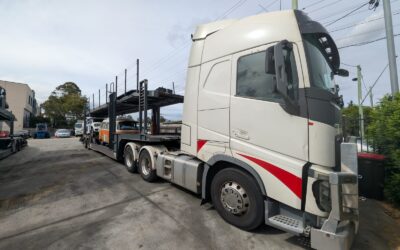
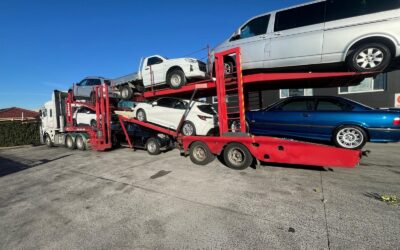
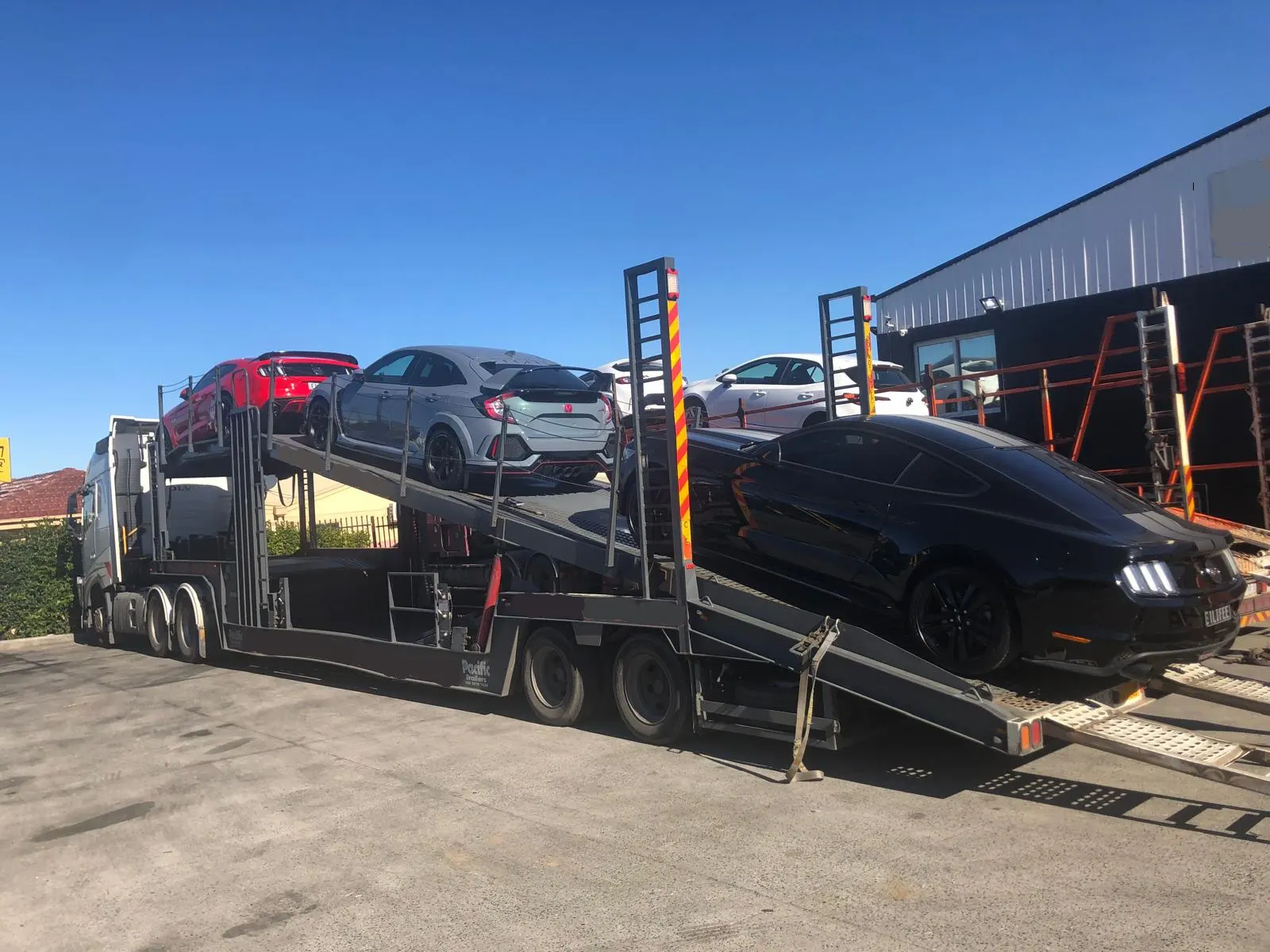
Most vehicles travel on open carriers — the same type of multi-car trailers you’ll see on the highway — which is the more common and efficient option for everyday cars. Enclosed transport fully shields the vehicle from weather, road debris, and dust, which matters more for classic cars, low-clearance vehicles, or brand-new deliveries, but it’s a more specialised service with less capacity per truck. We break down exactly when each option makes sense in our open vs enclosed car transport comparison.
4. Pickup and Delivery Locations
Door-to-door pickup in inner Melbourne — think narrow streets in Fitzroy, Carlton, or the CBD — can be trickier for a large car-carrying truck to access than a wide suburban street in the outer growth corridors. Some operators offer a nearby meeting point as an alternative when a street genuinely can’t accommodate a full-size carrier. The same logic applies at the destination end. The more convenient and accessible both addresses are, the more efficiently a carrier can slot your vehicle into its run.
5. Seasonal Demand
Vehicle transport demand isn’t flat across the year. Peak relocation periods — the lead-up to end of financial year, the summer moving season, and the weeks around school-year changes — tend to see more bookings competing for truck space. Booking outside these windows, or being flexible on your pickup date, generally gives operators more room to fit you in efficiently.
6. Fuel and Running Costs
Fuel is one of the largest ongoing costs for any road transport business, and retail fuel prices in Australia move constantly with global crude oil markets and the local competitive landscape. The ACCC’s fuel and petrol monitoring program tracks these movements across the country’s capital cities, including Melbourne, on an ongoing basis. When fuel costs shift, it flows through to operating costs across the whole road freight industry — car carriers included.
7. Insurance and Coverage Level
Reputable transport providers carry insurance as standard, but the level of coverage and any additional protection you request can influence your quote. It’s worth understanding exactly what’s covered before you book, particularly for higher-value vehicles. Our guide to interstate car transport insurance explains what’s typically included and what to check for.
8. Booking Lead Time and Flexibility
Locking in a fixed pickup date at short notice, during a busy period, generally gives an operator less flexibility to plan an efficient run — which can affect pricing. Booking with more lead time, or offering a pickup window rather than a single fixed day, tends to work in your favour.
| Factor | Why It Affects Your Quote |
|---|---|
| Distance & route popularity | Common corridors are easier for carriers to fill efficiently |
| Vehicle size & weight | Affects how many vehicles fit on one carrier |
| Open vs enclosed carrier | Enclosed transport is more specialised, with less capacity per run |
| Pickup/delivery access | Inner-city or hard-to-access addresses can add complexity |
| Season | Peak relocation periods see higher demand for truck space |
| Fuel prices | A major, fluctuating input cost for every transport operator |
| Insurance/coverage level | Higher-value protection can adjust the quote |
| Booking lead time | More notice generally means more scheduling flexibility |
What Makes Melbourne’s Car Transport Market Unique
Melbourne isn’t a static market. According to the Australian Bureau of Statistics, Greater Melbourne continues to be one of the fastest-growing capital cities in the country, and that steady flow of people arriving, leaving, and relocating within Australia keeps demand for interstate vehicle transport consistently high. Popular lanes out of Melbourne include the run up the Hume Highway to Sydney and beyond to Brisbane, the corridor west to Adelaide, and the long haul across the Nullarbor to Perth. Each of these routes has its own rhythm of truck availability, which is part of why pricing varies so much lane to lane.
There’s also a compliance side to the industry that’s worth knowing about, even as a customer. Heavy vehicle carriers operating across state lines fall under the Heavy Vehicle National Law, administered by the National Heavy Vehicle Regulator (NHVR), which sets safety, mass, and dimension standards for the trucks moving your vehicle. Choosing an operator that takes these obligations seriously is one of the clearest signs you’re dealing with a professional, properly compliant transport business.
And if you’re relocating to Melbourne permanently rather than just shipping a car one-way, don’t forget the paperwork on the other end. If you’re moving to Victoria and bringing an interstate-registered vehicle with you, VicRoads requires you to register it in Victoria once you’re settled — it’s a separate step from the transport booking itself, but an important one to have on your checklist.
How to Get an Accurate Car Transport Quote in Melbourne
Because pricing depends on so many specific details, the fastest way to get a genuinely accurate number is to have the essentials ready before you request a quote:
- Pickup and delivery addresses (or at least suburbs)
- Vehicle make, model, and whether it’s currently running
- Preferred pickup window or firm date
- Whether you want open or enclosed transport
- Any modifications, oversized dimensions, or special handling needs
Having these details on hand means an operator can give you a real number rather than a rough estimate. For a deeper walkthrough, see our guide on how to get an accurate car transport quote in Australia, or request your quote directly and we’ll take it from there.
Practical Ways to Keep Your Transport Cost Down
You don’t have to accept the first number you’re given as fixed. A few habits genuinely help:
- Book ahead where you can. More lead time gives operators more scheduling flexibility, which tends to work in your favour.
- Stay flexible on dates. Offering a pickup window instead of one fixed day opens up more truck options.
- Consider depot-to-depot if it suits you. If a nearby depot is easy for you to reach, it can be a simpler option than a hard-to-access door-to-door pickup.
- Avoid the tightest peak windows if you can. End-of-financial-year and peak summer relocation periods see the most demand.
- Get multiple quotes, but compare properly. Check what’s actually included — insurance, tracking, door-to-door vs depot pickup — not just the headline figure.
- Ask about combining moves. If you’re shifting more than one vehicle, ask whether they can travel together.
Frequently Asked Questions
How much does it cost to transport a car in Melbourne?
There’s no single fixed price. It depends on your route, vehicle type, chosen carrier (open or enclosed), pickup/delivery access, and the time of year you book. The most accurate way to find out is to get a free, tailored quote.
How long does car transport take from Melbourne?
Transit times vary by distance and route demand. Shorter east-coast runs, such as Melbourne to Sydney, are generally quicker than long-haul routes like Melbourne to Perth, which naturally take longer given the distance involved. Your operator should be able to give you a realistic transit window at the time of booking.
Is car transport cheaper than driving the car yourself?
It depends what you factor in. Driving long distance yourself involves fuel, accommodation, meals, your own time, and added kilometres and wear on the vehicle — plus the fatigue and risk of a multi-day interstate drive. Once all of that is accounted for, professional transport is often a genuinely comparable, and far more convenient, option.
Do I need to register my car in Victoria if I’m moving to Melbourne?
Generally, yes, if you’re relocating permanently. VicRoads requires vehicles brought into Victoria from another state to be registered locally once you’ve settled in, separate from arranging the transport itself.
What’s the difference between open and enclosed car transport?
Open transport carries your vehicle on a standard multi-car trailer exposed to the elements, and it’s the most common, cost-effective option for everyday cars. Enclosed transport fully shields the vehicle in a covered trailer, better suited to classic, low-clearance, or high-value cars. See our full comparison here.
Can I transport a car that isn’t currently registered or running?
In many cases, yes, though it requires the right equipment and some extra planning. Read our guide on transporting an unregistered vehicle in Australia for the full picture.
Ready to Move Your Car?
Vehicle transport pricing genuinely comes down to your specific circumstances — there’s no shortcut around that. What you can control is how prepared you are when you ask for a quote, and who you choose to trust with the job. If you’re planning a move in or out of Melbourne, explore our interstate car transport services, check our FAQs for more detail, or get in touch and we’ll walk you through exactly what your move involves.